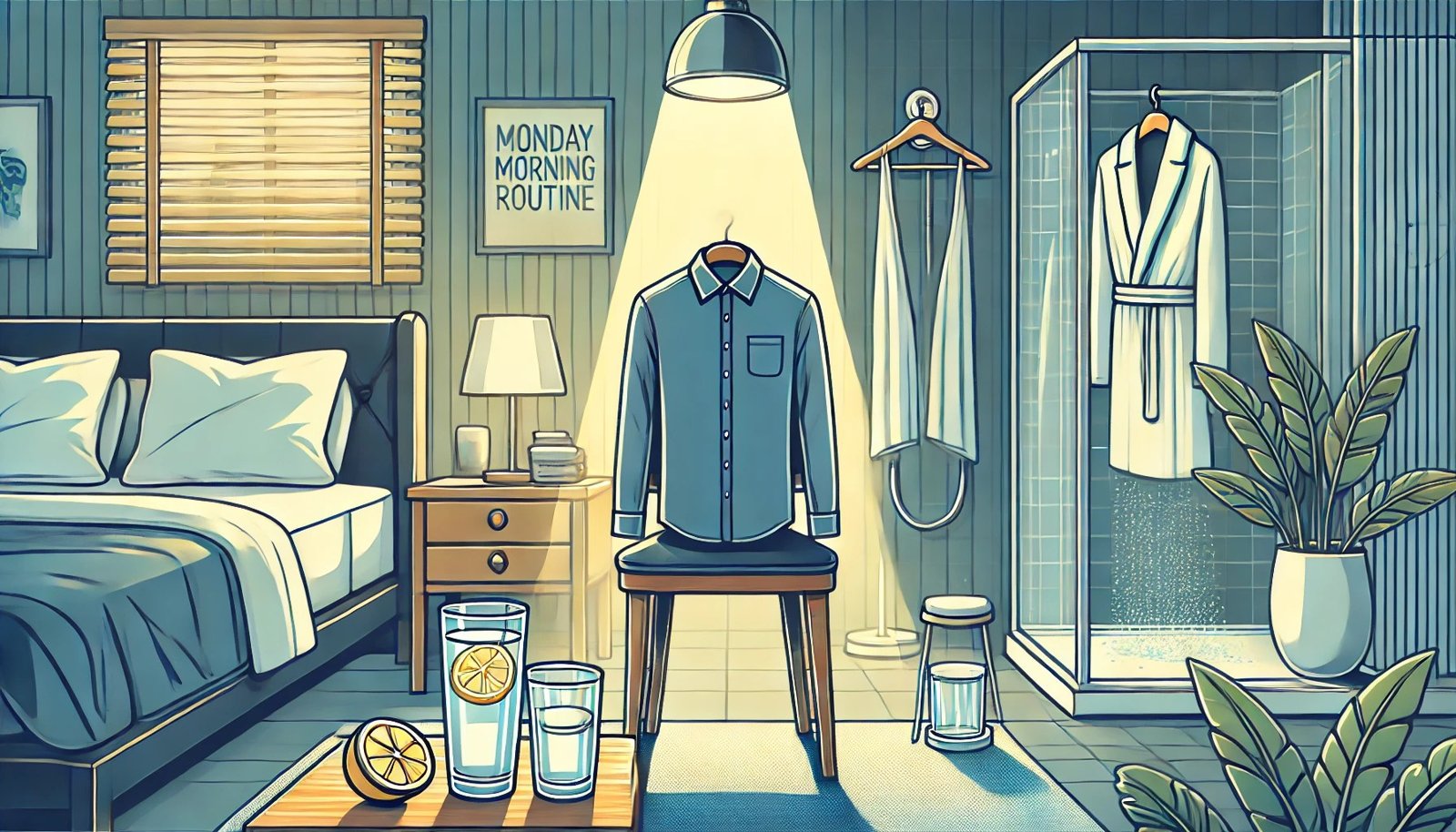
Monday Morning Routine: Give the Week a Better Starting Point.
A few things prepared, a little breathing room and one clear priority. A useful morning routine should make life easier, not start another competition.
Healthy Baseline · Updated 12 October 2026
Monday has a habit of arriving before you have agreed to it. The alarm goes, somebody needs something, and the phone already has opinions about how you should spend the day.
A routine cannot make the week behave. It can remove a few avoidable decisions before the demands start. That is a useful enough ambition—without cold-plunge heroics or a timetable built for somebody else’s life.
Routine makes room for attention
Knowing where your clothes are and what needs doing first saves a small amount of friction. Add up several small decisions and a morning can feel less like a series of scavenger hunts.
That can help you settle into work. It does not guarantee “flow”, and a good day does not require you to achieve a special mental state before opening the laptop.
Seven steps you can adapt
Wake up and take a moment. Sit or stand comfortably, notice your breathing and let it settle. A few ordinary, unforced breaths are enough. If you are exhausted, the question may be how to protect sleep, not how to impose a stricter alarm.
Use a familiar cue. A shower, washing your face or opening the curtains can mark the start of the day. Choose a comfortable shower temperature. A cold finish is optional, not an entrance exam.
Put things in their place. Clothes, keys, work bag and any essentials can be ready the evening before. The best productivity tool may be knowing where your other shoe is.
Make a drink easy. Have water available with breakfast or while getting ready. Lemon is a flavour preference, not an internal cleanse. Tea and coffee contribute fluid too; consider how caffeine affects you.
Allow for the household. Agree who does what if others live with you. If you live alone, give yourself a few minutes for ordinary tasks. A routine should account for caring responsibilities, rather than blame you when they interrupt.
Delay the unnecessary scroll. Keep social feeds closed until you have started something useful. Leave essential calls or messages available if your responsibilities require them.
Choose the first meaningful task. Write down one priority and a realistic starting action. “Draft the first paragraph” is more usable than “sort my entire working life”.
Prepare the evening, simplify the morning
Do not attempt all seven at once. Pick the point that currently causes the most hassle and make it easier. Preparing breakfast ingredients or charging your phone away from the bedside may fit better than introducing a whole new ritual.
For shift workers, Monday morning may be Monday afternoon—or Thursday evening. Use the beginning of your day as the anchor. The principle is a calmer start, not obedience to an office schedule.
Explore focus without chasing a perfect state
Cal Newport and Andrew Huberman discuss practice, skills and flow in the conversation below. It offers more context for the difference between doing useful work and trying to manufacture a particular feeling before you start.
How to Practice, Build Skills and the Role of Flow State — Cal Newport and Andrew Huberman
Loading this player connects to YouTube (Google), which may collect device and viewing information and use cookies.
Credit: Huberman Lab Clips, with Cal Newport and Andrew Huberman. Watch on YouTube ↗
A routine needs a fallback
Ordinary day: follow your chosen sequence without overthinking it.
Busy day: keep the smallest helpful pieces, such as a drink and one written priority.
Disrupted day: restart at the next useful opportunity instead of declaring the week lost.
Protecting sleep, staying hydrated, breathing comfortably, making space for focus and remembering what matters all have a place here. They support the day; they are not another list to fail.
A useful routine leaves more attention for people, work and life outside your own habits. If it takes an hour to administer, it probably needs simplifying.
ONE THING TO TRY
Put tomorrow’s clothes and essentials in one place tonight. In the morning, write one useful first task before opening a social feed.