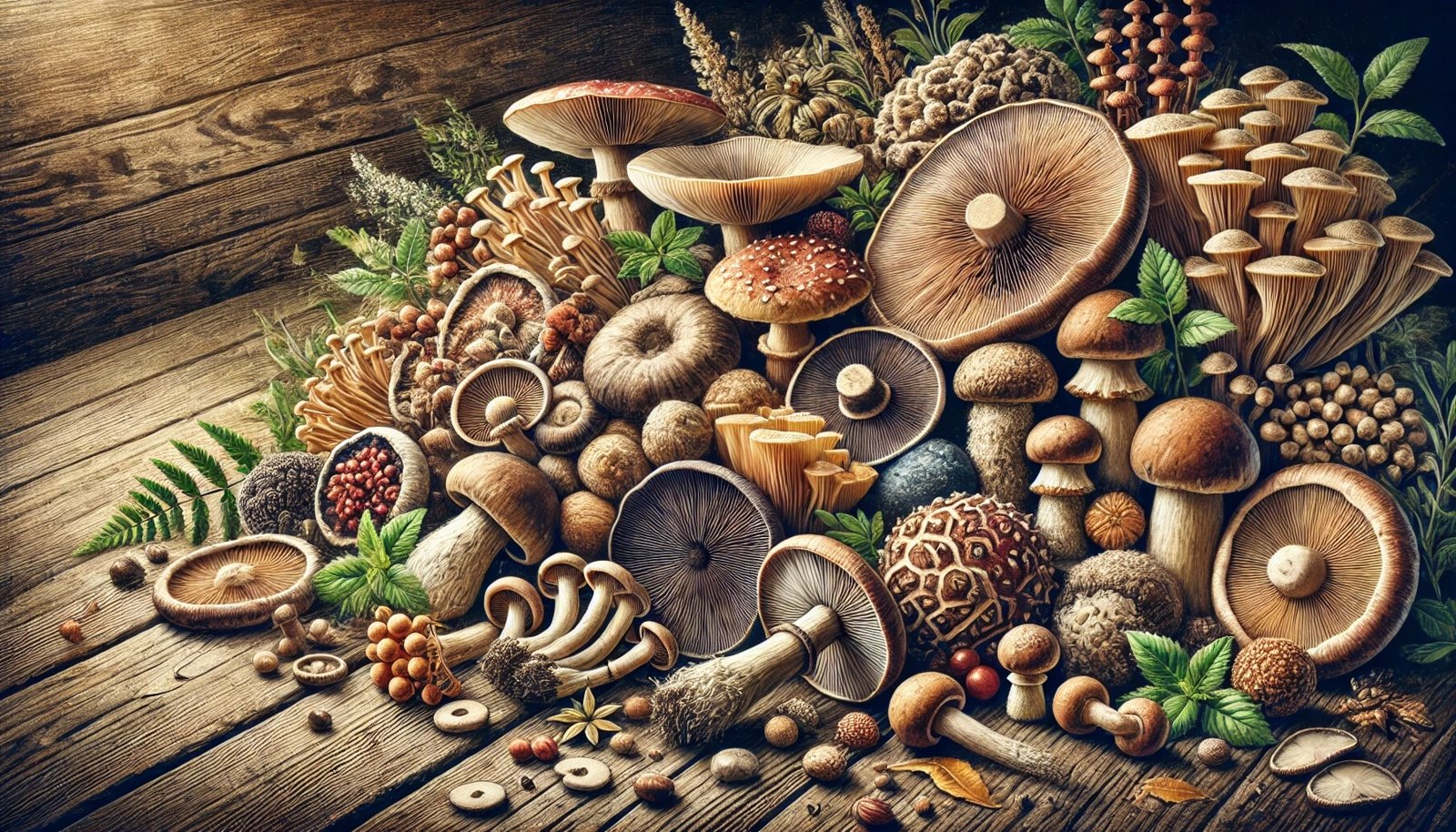
The Mighty Mushroom: Food, Fascination and a Little Perspective.
From the frying pan to fungal networks, mushrooms have an intriguing story. Enjoy the food, explore the science and keep the miracle claims in perspective.
Healthy Baseline · Updated 12 October 2026
Mushrooms are an odd little success story. They can turn an ordinary breakfast into something worth sitting down for, yet spend most of their lives doing work we barely notice.
Then there are the powders, extracts and claims that a mushroom coffee will transform your brain. There is plenty to be curious about. We can enjoy that curiosity without treating every fungus as a pharmacy.
What are mushrooms, really?
Mushrooms are the fruiting bodies of certain fungi. They are not plants. Many fungi break down organic matter; others form partnerships with plants. Beneath or within the growing material, fine fungal threads called hyphae form a network known as mycelium.
The woodland “internet” is an appealing metaphor, but it can make a complex ecosystem sound more purposeful and settled than the evidence allows. Nature is interesting enough without giving every mushroom a messaging app.
A long history, with different uses
People have eaten mushrooms and used fungi in traditional practices for centuries. Shiitake and reishi have long associations with East Asian food and medicine. Truffles have a culinary history, while psilocybin-containing mushrooms have been used in some Indigenous ceremonial traditions.
That history helps explain our fascination. Traditional use alone does not establish that a modern extract prevents illness or improves memory.
Three different conversations
Edible mushrooms: button, portobello, oyster and shiitake are familiar cooking options. Different textures make them useful in soups, omelettes, stir-fries and sauces. Truffles are fungi too, despite their rather grand reputation.
Products sold as “medicinal” mushrooms: reishi, lion’s mane, chaga and turkey tail appear in supplements. Laboratory findings and early human research are worth studying, but they do not justify blanket promises about immunity, inflammation or brain repair.
Psychedelic mushrooms: psilocybin is being investigated in controlled clinical settings. Those settings include screening and professional support. This is a separate subject from adding mushrooms to dinner, and it is not a home treatment recommendation.
What earns them a place on the plate?
Edible mushrooms contribute nutrients such as some B vitamins and minerals, with amounts varying by species and growing conditions. UV-treated mushrooms can provide vitamin D; an ordinary packet should not be assumed to meet your needs.
Perhaps their strongest everyday selling point is flavour. They make a meal more interesting. They can sit alongside meat, beans, eggs or tofu, without asking you to declare allegiance to a diet.
Brown sliced mushrooms in a pan, then add them to eggs or toast.
Use them to give a soup or bean dish more texture.
Try a different edible variety from a reliable shop.
A conversation for the curious
Paul Stamets’ conversation with Joe Rogan explores the wider world of fungi. It is included as a conversation to explore, alongside academic nutrition information—not as proof of every health claim made in a podcast.
Joe Rogan Experience #1035 — Paul Stamets
Loading this player connects to YouTube (Google), which may collect device and viewing information and use cookies.
Buy edible mushrooms from a reliable source. Do not identify wild mushrooms from a picture or an app and assume they are safe to eat. Supplements also need scrutiny: a concentrated extract is different from food and can have unwanted effects or interactions.
Healthy Baseline’s starting point is simple: varied food, informed choices and room to learn. You can appreciate the extraordinary world of fungi without needing it to fix everything.
ONE THING TO TRY
Add a shop-bought edible mushroom variety to one meal this week. Notice whether you enjoy it before considering any supplement.