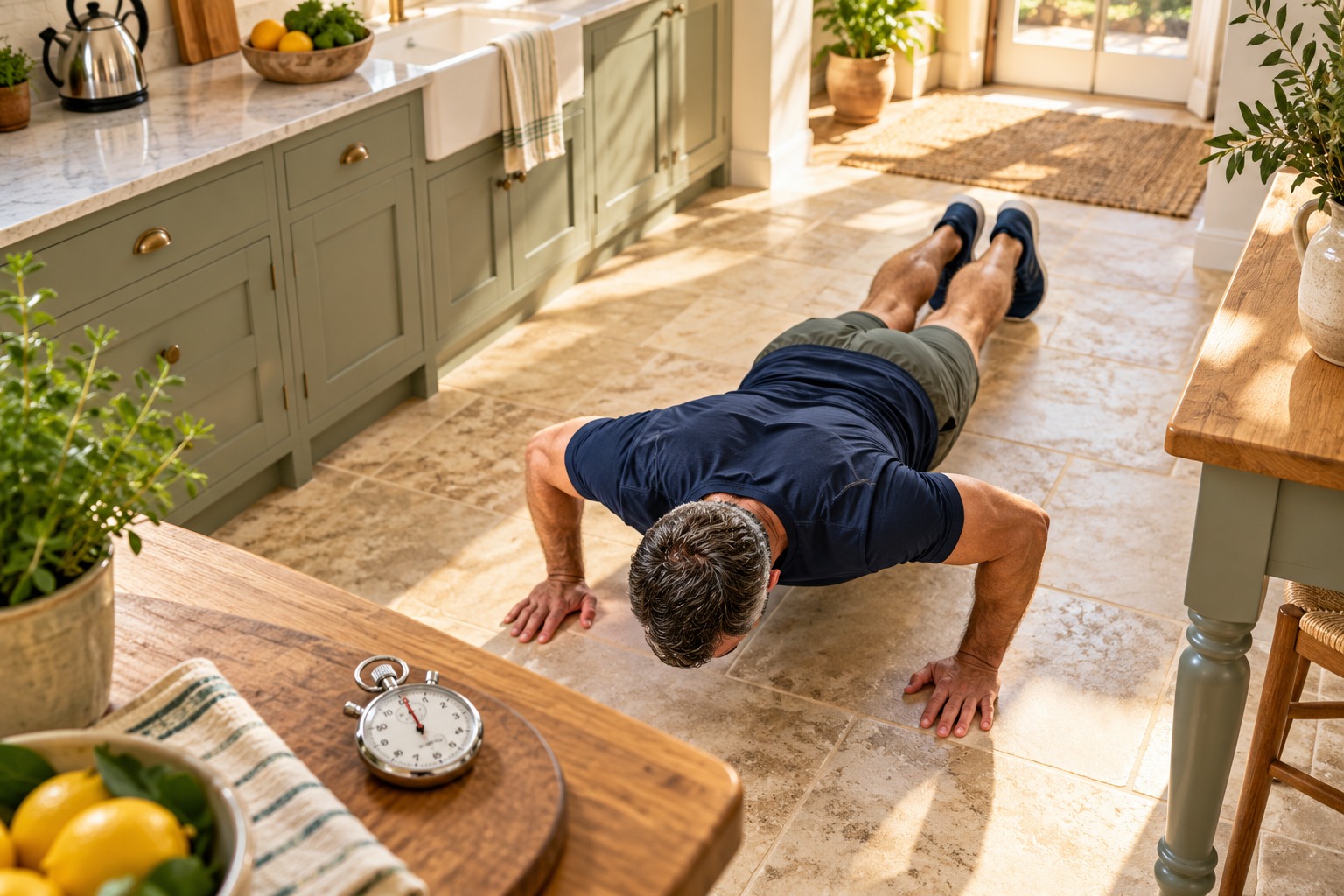
Getting down, getting up and keeping your legs useful. Explore our squatting roots with a version that fits your body today, rather than a contest to reach the floor.
Healthy Baseline · Updated 12 October 2026
Getting down and getting back up again used to be part of an ordinary day. Long before gyms and office chairs, people worked, rested and spent time close to the ground.
Squatting still has a place in everyday life around the world. Meanwhile, many of us have become very good at sitting — in cars, at desks and on sofas — and a little less familiar with the journey towards the floor.
Revisiting the squat can be a practical way to work on useful movement. You don’t need a barbell or a prehistoric lifestyle. Start with the body you have today and a version you can comfortably control.
The tale of two squats
It helps to separate two familiar uses of the movement:
The exercise squat: lowering yourself under control, then standing back up. You can vary the depth, support and resistance.
The resting squat: settling into a deeper position for an everyday activity or rest. This is familiar to some people and unfamiliar to others.
Someone who has used a deep resting squat throughout life may be comfortable there. If you’ve spent decades behind a desk, you may need a different starting point. Our squatting roots are interesting; your current strength, mobility and previous injuries still matter.
What makes it useful in midlife?
Think about the abilities behind the exercise:
Getting up from a low chair with confidence.
Lowering yourself to tend a garden or reach a cupboard.
Having useful leg strength for ordinary activities.
Feeling more comfortable moving through a range that suits you.
These are good reasons to practise. A useful workout doesn’t have to produce a dramatic photograph or leave you unable to climb the stairs the following day.
How deep should you go?
Choose a range you can control comfortably. A shallow squat or a sit-to-stand from a chair can be a worthwhile starting point. Going below the knees isn’t an entry requirement.
Use a comfortable foot position, bend through the hips, knees and ankles, and keep the movement smooth. Let your knees follow the direction of your feet. A stable chair can give you a clear target for where to finish.
Reduce the depth or stop when control starts to slip. If a movement hurts, stop and reassess; get suitable advice if needed. Depth is something to explore gradually, not a destination to force yourself into.
Five ways to build it into real life
Start with a chair. Choose one that is stable and won’t slide. Practise standing up and sitting down slowly, using your hands for support if needed.
Explore a supported squat. Hold a secure support and try a comfortable range. Check that the support can’t shift or tip.
Build control before adding weight. Once the movement feels manageable, a suitable light weight can offer progression. A coach can help with technique if you’re unsure.
Give it a place in the week. Include it within a manageable strength routine and leave room for recovery. Consistency is easier when the plan fits your actual diary.
Keep the harder variations optional. Single-leg squats and jumps demand more strength, balance or impact tolerance. You can build a useful baseline without doing them.
Watch, learn and adapt
The Strength Side video below explores squat positions and movement. Watch it for ideas, then adapt the options to your own starting point. You don’t need to copy every depth or progression.
How Squats Heal the Body
Loading this player connects to YouTube (Google), which may collect device and viewing information and use cookies.
“How Squats Heal the Body” is the creator’s video title. Here, the aim is to practise a useful movement; the video isn’t a treatment plan for an injury.
And yes, there’s the bathroom question
Squatting has also been used for toileting — a part of human history that rarely features in a stylish gym advert. Bathroom posture and an exercise squat are different questions, though.
Practising the movement doesn’t require replacing your toilet or balancing awkwardly. Persistent bowel problems deserve attention in their own right, rather than assuming a deeper squat will solve them.
Old roots, a realistic routine
Movement and strength are two of our nine principles. Squats can contribute alongside walking, carrying, balance and other activities you enjoy. Food, hydration and rest support the wider routine too.
Keep the ambition practical: a little more ability to do the things ordinary life asks of you. Start comfortably, build gradually and leave the competition with the caveman in the illustration.
ONE THING TO TRY
If it feels comfortable, practise a few slow sit-to-stands from a stable chair. Use support as needed and stop if the movement hurts.