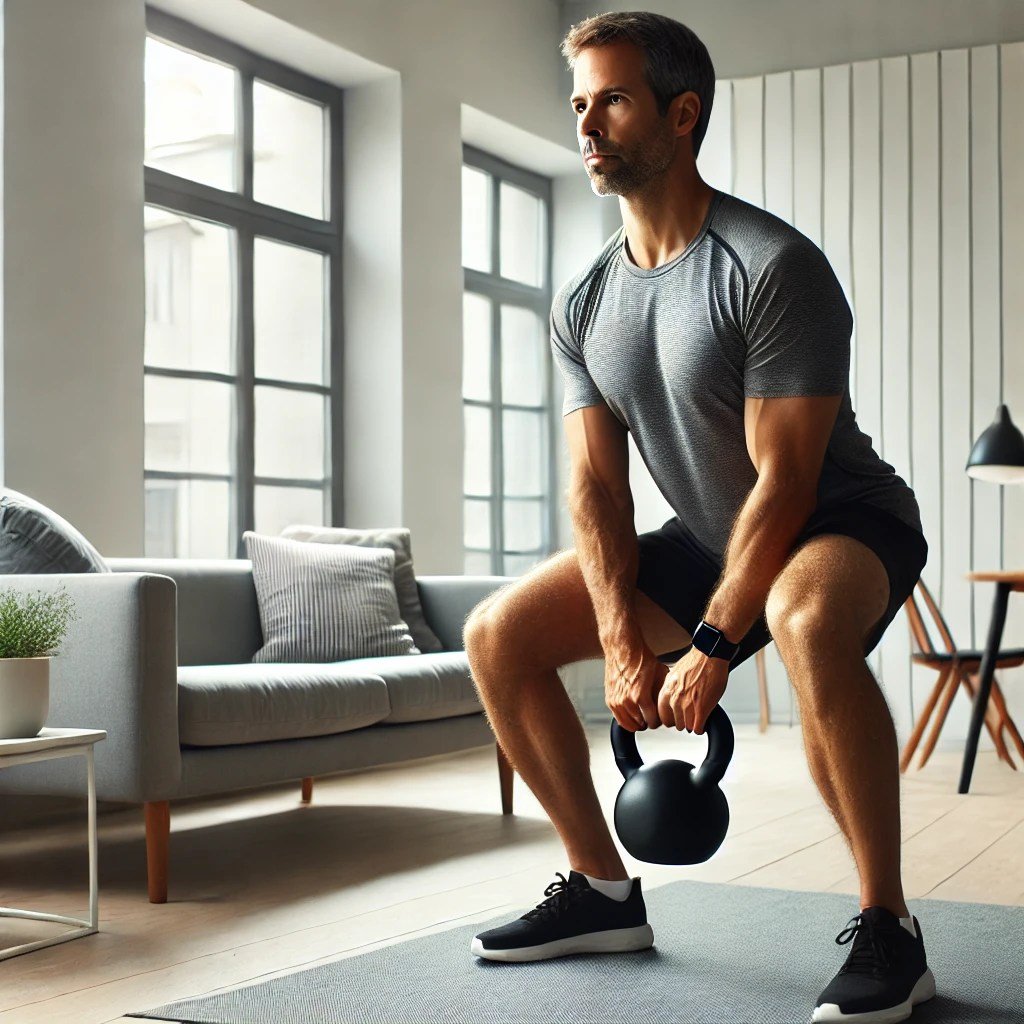
Kettlebells: Simple Strength Without a Room Full of Equipment.
One compact weight can offer plenty of variety. Learn the movements, choose a manageable load and build a routine that fits your week.
Healthy Baseline · Updated 12 October 2026
A kettlebell looks like somebody put a handle on a cannonball. It is not elegant, but it is compact—and it can earn its corner of the room.
For a busy man who would like to be stronger without collecting machines, that simplicity is appealing. The useful part is having a tool you will actually use. The handle does not make technique optional.
Why a kettlebell?
You can use it for lifting, carrying, squatting, rowing and, once learned, swinging. Different movements challenge strength and control in different ways. Some sessions also get you breathing harder.
It is one option alongside bodyweight work, bands, dumbbells or a gym. It does not automatically cover every movement you need or replace the rest of an active life.
Strength: a manageable resistance gives muscles work to do.
Stability: controlling a load asks you to pay attention to position and balance.
Convenience: a short session is easier to arrange when the equipment is nearby.
The five movements, with a sensible order
Deadlift: learn to hinge at the hips and lift under control. Start with a manageable load and coaching if the movement is unfamiliar.
Goblet squat: hold the weight in front and use a comfortable range. A bodyweight squat or sit-to-stand can be the starting version.
Row: use a stable position and a load you can move smoothly. Get help with setup if you are unsure.
Press: overhead work needs comfortable shoulder movement and good control. It is optional; pain or limited movement is a reason to choose another exercise.
Swing: a dynamic hip-hinge movement, not a squat followed by an arm lift. Learn it before adding speed, repetitions or a heavier bell.
You do not have to do all five in every session. Competence with a few movements is a better starting point than racing through an unfamiliar circuit.
Keep the weekly plan realistic
Two or three short strength sessions may fit your week, with recovery between demanding sessions. The original appeal of a roughly 20–30-minute workout is that it is manageable, not that a particular duration guarantees a result.
Warm up: move comfortably and practise the movements without a heavy load.
Choose a few exercises: use a small number of controlled repetitions you can complete with good technique.
Rest: take enough time between efforts to keep the movement controlled.
Finish: stop before tiredness turns the session into a series of improvised lifts.
Watch the movement, then learn it properly
Tim Ferriss helped popularise the simple kettlebell approach. The demonstration below is a useful point of reference, not a prescription to copy somebody else’s load or repetition total.
Kettlebell swing demonstration
Loading this player connects to YouTube (Google), which may collect device and viewing information and use cookies.
Credit: Tim Ferriss Online News; demonstration by Tim Ferriss. Watch on YouTube ↗
What weight should you buy?
A single recommended weight for all men makes little sense. Experience, the exercise, current strength and any limitations matter. Try equipment with qualified guidance if possible, and choose a load you can control.
Keep the area clear of people, pets and breakable objects. Stop if an exercise hurts. Strength, regular movement, food and recovery work together; the aim is to become more capable for life outside the workout.
ONE THING TO TRY
Before adding swings, practise an unloaded hip hinge and arrange a technique check if kettlebells are new to you. Choose control before load.